
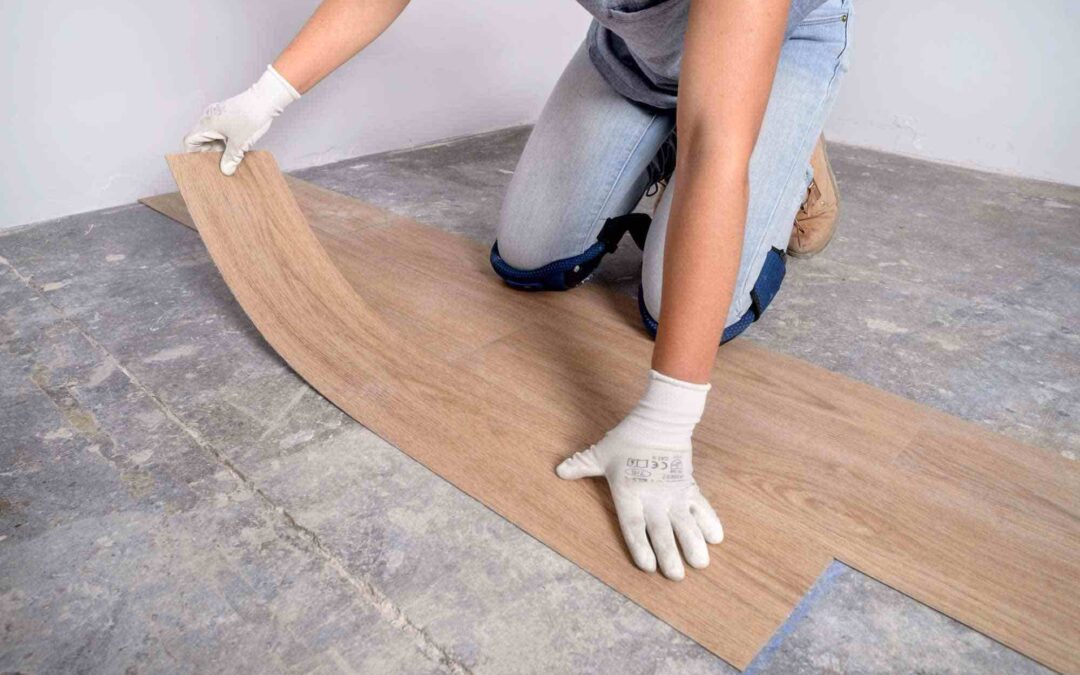
How to install vinyl flooring
Here is a brief overview on how to install vinyl flooring in your home, room or office. Vinyl is a flexible floor covering, known for its ease of installation. However, you should know that installing vinyl flooring requires certain precautions and an experienced professional.
The different types of vinyl flooring installation
Vinyl is a flexible floor covering, very famous in renovation. It must be said that this PVC flooring can radically change the look of a room.
Laying a vinyl floor
To successfully lay a PVC floor, it is essential to work methodically and to have the help of a professional. If you want to avoid beginner’s mistakes, follow our installation tips carefully.
Prepare the ground
The first step will be, of course, the preparation of the part to be covered. Naturally, it is important to completely empty the room of its furniture and objects.
Vinyl flooring can only be laid on a flat, clean and dry floor. Therefore, you will start by verifying that your ground is flat. If necessary, consider leveling the floor to ensure a flat surface. Ground imperfections can affect your new floor. If your floor has slight imperfections, prefer to purchase a thick vinyl floor, which will be better able to hide them.
Once your floor is perfectly flat, it is important to dust and then wash it. Allow to dry before starting work
Lay the PVC floor
To begin, you will lay the vinyl flooring planks in the room to be covered. The vinyl should be pressed firmly onto the vinyl so that it fits tightly against the floor, pressing from the center to the edges of the wall.
Once the shingles are in place, use putty knives to spread a layer of glue on the middle of the wall covering to be glued.
Once the siding is glued, press the vinyl back down to adhere it to the floor.
Smooth from the center toward the walls to release excess glue to the outside and ensure the flatness of your PVC flooring.
For seams, the two pieces of vinyl flooring should overlap. If there is a pattern, make sure the patterns are aligned correctly before gluing.
Finishing
All you have to do is cut the edges that stick out from the wall. To cut the vinyl, use a metal ruler and a cutter to make a straight cut.
We recommend that you install baseboards along the walls to protect the edges of your vinyl flooring. Also remember to place the sill rails flush with the door. Without it, you run the risk of peeling off the vinyl with each pass.
Your vinyl floor is finally installed! Before rearranging the room, let it dry for 48 hours to ensure proper flooring placement. Otherwise, your furniture may leave marks on the floor. Likewise, avoid walking into the room before the glue has had time to dry.
Finally, clean the vinyl floor for the first time before placing the furniture to remove any glue residue.